

Download the Pondoland Times app to get breaking national news, major government updates, public alerts, and important South African stories as they happen.
Home Affairs Minister Leon Schreiber says targeted reforms are underway to curb corruption, close system loopholes and prevent officials from manipulating visa and identity processes.
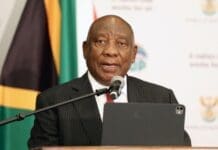
Speaking in Pretoria on Monday, 23 February 2026, the Minister responded to the Special Investigating Unit interim report into serious maladministration within the Department of Home Affairs.
What happened?
The Special Investigating Unit (SIU) released an interim report detailing recurring corruption schemes inside Home Affairs.
The investigation uncovered document fraud, visa and work-permit manipulation, and facilitation networks enabling unauthorised entry into South Africa.
In response, Schreiber confirmed that disciplinary action is underway:
- 20 officials have been dismissed since April last year
- 75 disciplinary cases were completed over the past two financial years
- 16 officials were suspended without pay
- 22 officials received written warnings
Several matters have also been referred for criminal prosecution, and the Minister has urged the National Prosecuting Authority to prioritise the cases.
Furthermore, the Director-General has been asked to engage the Departments of Public Service and Administration and Cooperative Governance to prevent dismissed officials from being re-employed elsewhere in government while criminal proceedings continue.
Why it matters
Home Affairs manages identity documents, visas and citizenship systems that directly affect residents, businesses and travellers.
Corruption in these systems can enable identity theft, illegal entry, and fraud involving visas and work permits. Therefore, tighter controls may affect visa processing, study permits and tourist travel procedures.
Importantly, the department has identified more than 2 000 study visas that were fraudulently issued through syndicates operating within Home Affairs.
Administrative processes are now underway to cancel those visas. In addition, subsequent visas obtained by the same individuals will be “ringfenced” to ensure irregularly issued documents are withdrawn and that perpetrators face deportation or prosecution where required.
What you need to know
| Reform Area | What is changing |
|---|---|
| Staff accountability | 20 dismissals, 16 unpaid suspensions, 22 warnings issued |
| Criminal action | Cases referred for prosecution |
| Fraudulent study visas | Over 2 000 identified for cancellation |
| Visa processing | Shift from manual to digital systems |
| Tourist visas | Electronic Travel Authorisation (ETA) expanding |
| Border control | Facial recognition expanding to airports and major land ports |
Digital reforms underway
The department is shutting down manual paper-based processes that previously created opportunities for manipulation.
The Electronic Travel Authorisation (ETA) system, launched last year, now allows visa applicants to:
- Apply online
- Capture biometrics digitally
- Receive real-time approvals
- Undergo machine-learning document verification
According to the Minister, the system has already declined more than 30 000 tourist visa applications that did not meet regulatory requirements.
The ETA uses biometric facial recognition to match applicants to passport photos. Because decisions are rules-based and digitally processed, officials cannot manually override outcomes.
Home Affairs is also working with the Border Management Authority and SARS to expand facial recognition at international airports and major land ports.
Once complete, the ETA will become the central entry point for all tourist visas. Processing at South African missions abroad will be phased out. The system will later expand to additional visa categories, including study visas.
In addition, the department plans to anchor the ETA within an Intelligent Population Register linked to a new Digital ID system. The goal is to ensure biometric verification protects citizenship and reduces identity theft linked to the green bar-coded ID book.
What you should do next
If you hold a study visa or plan to apply for one:
- Ensure all documentation was lawfully obtained
- Monitor official Home Affairs announcements for updates
- Use authorised digital application channels
- Avoid intermediaries offering “fast-track” services
If you suspect corruption, report it through official anti-corruption channels within Home Affairs.
For related reporting, visit our Local Eastern Cape News hub.
Get practical updates that affect your household and business. Subscribe to the Pondoland Times newsletter.
Download the Pondoland Times app for verified community updates.