

Download the Pondoland Times app to get breaking national news, major government updates, public alerts, and important South African stories as they happen.
Heavy rainfall across Limpopo and Mpumalanga has pushed several major dams to full and above-capacity levels, triggering localised flooding and safety alerts in downstream communities.
The Department of Water and Sanitation (DWS) has confirmed that while dam levels are exceptionally high, all major dam infrastructure remains structurally safe. However, rivers and low-lying areas are experiencing dangerously high flows.
Among the most affected is Klaserie Dam, which has reached 106.7%, and Flag Boshielo Dam, currently at 105.6%. Spillover from upstream reservoirs has intensified pressure on the Olifants River system.
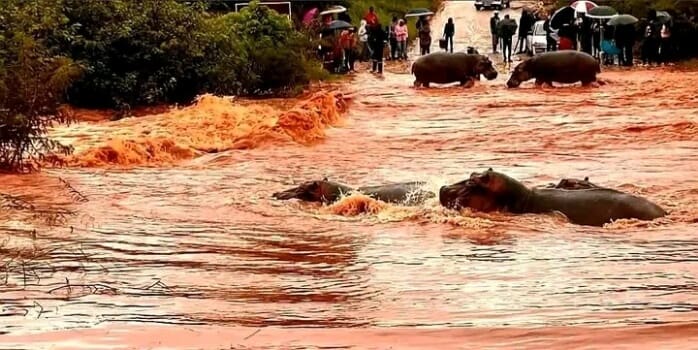
Rising water levels have already caused flooding in parts of Mopani District and areas near the Kruger National Park, resulting in the closure of several bridges and low-level crossings.
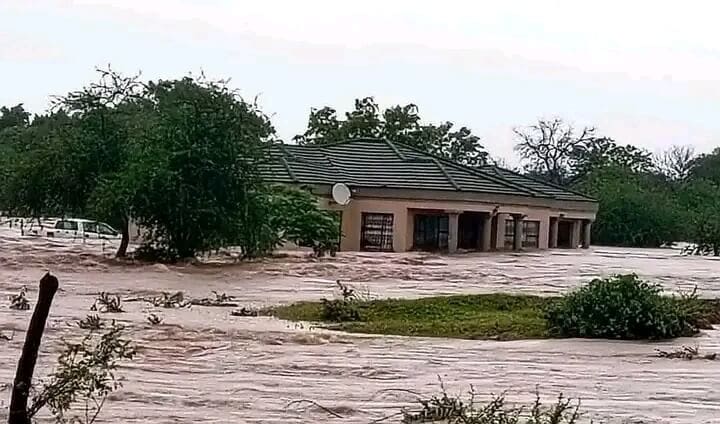
Despite the extreme conditions, DWS says its real-time hydrological monitoring network has been crucial in tracking river flows and flood waves. More than 70% of monitoring stations remain operational, enabling coordination with disaster management centres locally and across borders through transboundary water structures.
Disaster management teams remain on high alert, unsafe crossings have been closed, and humanitarian assistance has been mobilised where necessary. Residents are urged to avoid flooded roads, dam walls, and spillways, and to remain cautious of displaced wildlife.
Current Dam Levels (Selected):
- Nsami Dam surged from 70% to 123%
- Modjadji Dam rose from 63% to 105%
- Dap Naude Dam increased from 109% to 124%
- Middle Letaba Dam climbed from 8% to 62%
- Nzhelele, Luphephe, Nwanedzi, Vondo and Nandoni Dams all exceeded 105%
- Tzaneen and Ebenezer Dams remain above 100%
Heavy rainfall across Limpopo and Mpumalanga has pushed several major dams to full and above-capacity levels, triggering localised flooding and safety alerts in downstream communities.
The Department of Water and Sanitation (DWS) has confirmed that while dam levels are exceptionally high, all major dam infrastructure remains structurally safe. However, rivers and low-lying areas are experiencing dangerously high flows.
Among the most affected is Klaserie Dam, which has reached 106.7%, and Flag Boshielo Dam, currently at 105.6%. Spillover from upstream reservoirs has intensified pressure on the Olifants River system.
Rising water levels have already caused flooding in parts of Mopani District and areas near the Kruger National Park, resulting in the closure of several bridges and low-level crossings.
Despite the extreme conditions, DWS says its real-time hydrological monitoring network has been crucial in tracking river flows and flood waves. More than 70% of monitoring stations remain operational, enabling coordination with disaster management centres locally and across borders through transboundary water structures.
Disaster management teams remain on high alert, unsafe crossings have been closed, and humanitarian assistance has been mobilised where necessary. Residents are urged to avoid flooded roads, dam walls, and spillways, and to remain cautious of displaced wildlife.
Current Dam Levels (Selected):
- Nsami Dam surged from 70% to 123%
- Modjadji Dam rose from 63% to 105%
- Dap Naude Dam increased from 109% to 124%
- Middle Letaba Dam climbed from 8% to 62%
- Nzhelele, Luphephe, Nwanedzi, Vondo and Nandoni Dams all exceeded 105%
- Tzaneen and Ebenezer Dams remain above 100%