
Download the Pondoland Times app for breaking Eastern Cape news, community updates, jobs, and important stories from around you.
The Amadiba Crisis Committee (ACC) says eight recent community meetings about the N2 Wild Coast Toll Highway were run “behind closed doors,” with residents denied access to the very “resolutions” they were asked to support. On 20 September, 150 residents from 18 villages gathered in Jama, demanding to see all documents tied to the project and calling for an imbizo where the entire community can debate the land and the N2 proposal.
What Happened
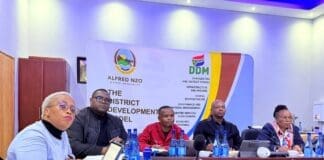
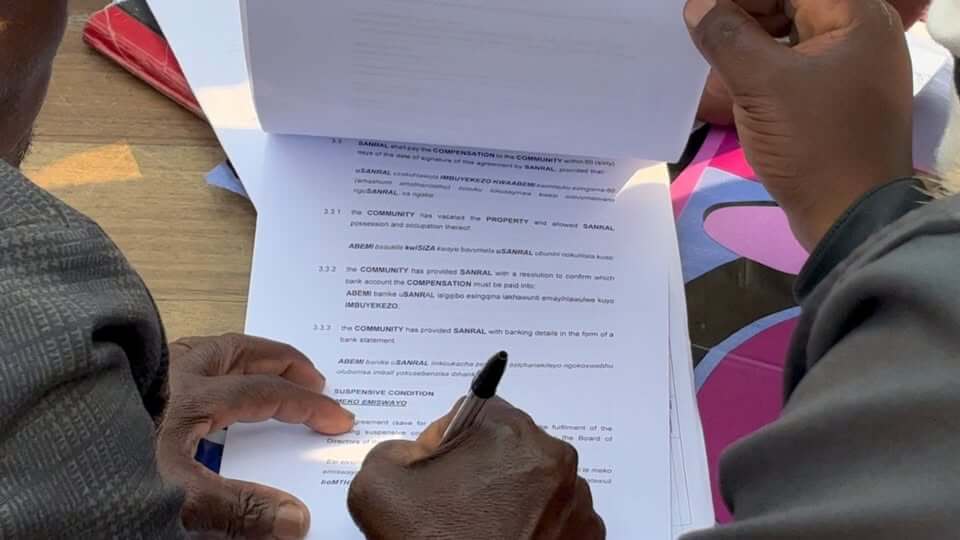
From July to mid-September, meetings were organised in rural Amadiba by the Department of Agriculture, Land Reform and Rural Development (DLRRD), SANRAL and the Winnie Madikizela-Mandela Local Municipality. According to ACC, residents repeatedly asked to read, copy or photograph the so-called “resolution” but were told, “we have not come to discuss that—we have come to sign a resolution.” Chairs allegedly signed first, selected a few people to co-sign, and retained the documents.
Why Residents Object
ACC says SANRAL’s long-standing approach in the Eastern Cape has been not to leave copies of documents with land-rights holders, a practice the committee argues would never be attempted on privately titled farms. Community members also argue that holding meetings in school classrooms during school hours disrupted learners—citing, for example, an incident in Mdatya on 10 September where an exam room was reportedly cleared.
Explainer: What “Full and Informed Consent” Means in Amadiba
- Community land: In Amadiba, land is held and managed collectively by right-holders, in line with customary law.
- Decision forum: General village meetings (imbizos)—not ad-hoc sessions—are the recognised places for decisions on land use.
- Consent standard: “Full and informed consent” means residents see the documents, hear the implications, ask questions, and then decide—openly and on the record.
- Legal frame (as cited by ACC): The Interim Protection of Informal Land Rights Act (IPILRA) protects informal/customary land rights and, in ACC’s view, requires consent to be free, prior and informed.
Tensions at Meetings
Residents say Public Order Police (POP), Crime Intelligence and local SAPS members attended some sessions in Sigidi and Mdatya in the second week of September. In Sigidi, a DLRRD official allegedly greeted a POP commander with, “There are people objecting here who are against development.” Community members also reported sexist remarks from a group of men who argued that women and youth should not speak in meetings—comments that were condemned by organisers and residents alike.
Competing Visions for “People’s Development”
ACC emphasises it is not opposing development, but wants a route that benefits the broader community. Over the past five years, residents say they’ve hosted imbizos and workshops with independent engineers to explore a central/inland alignment after the Mtentu Bridge, paired with upgrades to local access roads. They argue this alignment would reduce household relocations, protect arable fields, and spread economic benefits more fairly than the coastal route.
Timeline and Key Moments
- June–July: Notices and pre-meetings; ACC says some gatherings happened without full public notice.
- 5 Aug: A meeting reportedly shifted to Mdatya sports field at short notice.
- 10 Sept: Classroom exam disruption alleged in Mdatya.
- Mid-Sept: Police observed at Sigidi and Mdatya sessions.
- 20 Sept: Jama meeting of 150 residents from 18 villages—community demands documented; PAIA signatures submitted for access to records.
What ACC Wants Now
- Release the paperwork: Immediate disclosure of all “community resolutions” and related documents, with copies made available to land-rights holders.
- Hold an open imbizo: A single, well-advertised meeting where both the coastal proposal and the inland alternative are presented, questioned and debated.
- Respect customary forums: Stop using school hours/venues that disrupt learners; return to recognised community meeting places.
- Stop intimidation: Keep high-visibility policing away from meetings unless there is a clear, lawful need.
Voices From the Ground
Residents say the process has eroded trust. One attendee recalled a councillor’s remark at a funeral in Xolobeni earlier this year: “There will be meetings about the N2. Only people who want the road must come.” Community members say such messaging has no place in decisions that affect everyone’s land and livelihoods.
Official Response and Right of Reply
Pondoland Times has asked SANRAL, DLRRD and the Winnie Madikizela-Mandela Local Municipality to comment on the allegations regarding document access, meeting management and policing. This story will be updated with their responses.
How Readers Can Follow or Engage
- ACC says its objection document and technical notes are publicly available and that it will continue mobilising for an open imbizo.
- Contacts (as provided by ACC): Nonhle Mbuthuma (073 426 2955); Cromwell Sonjica (066 356 7131).
- ACC is also active on Facebook for updates.
Next Steps
Community leaders in Jama say they will keep pushing for transparency and a fair process. ACC has indicated that formal PAIA requests have been signed and lodged, and the committee expects the authorities to table all documents before any consent is recorded.