
Download the Pondoland Times app for crime updates, court news, and important alerts from your area so you don’t miss critical information.
In a dramatic move that has stunned the global diplomatic community, the United States has captured Venezuelan President Nicolás Maduro in a covert military operation, airlifted him to New York, and placed him in federal detention.
The event marks a rare moment in modern geopolitics: a sitting head of state forcibly removed by a foreign power and flown out of his country to face charges.
For many countries in the Global South — including South Africa — the operation raises urgent questions about international law, sovereignty, and the balance of power in global governance.
1. The US launched a military strike in Venezuela
On 3 January 2026, US forces conducted airstrikes and drone operations in and around Caracas, targeting locations described as “narco-terror assets”.
According to US military briefings, Maduro was tracked and intercepted while moving with a government convoy.
2. Maduro and his wife were taken to New York
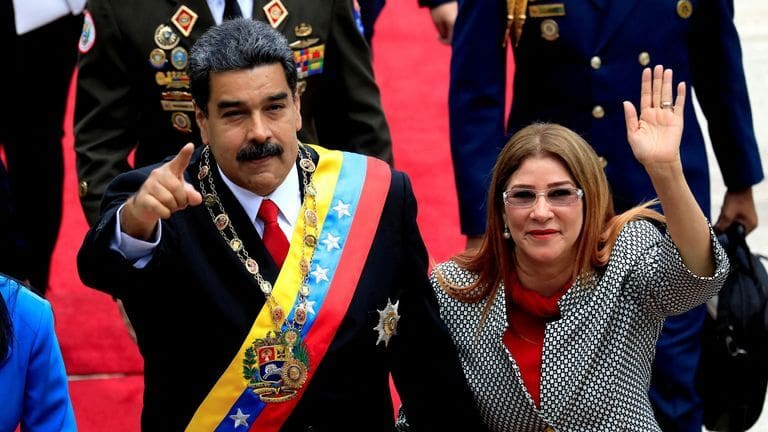
Maduro and First Lady Cilia Flores were flown to the United States under military escort.
They are being held at Brooklyn’s Metropolitan Detention Center, facing charges related to drug trafficking, corruption, and terrorism support.
Their arrival was confirmed by live video footage and official US statements.
3. Trump says the US will “run Venezuela for now”
US President Donald Trump, now in his third term, said the US will oversee a “safe and judicious transition” of power in Venezuela.
He claimed the action was necessary to “remove a criminal regime” and restore democracy — though critics have warned it sets a dangerous precedent.
4. South Africa has condemned the US action
South Africa’s Department of International Relations and Cooperation (DIRCO) issued a strong statement calling the operation:
“A clear violation of the United Nations Charter and a threat to global stability.”
Pretoria has called for an urgent UN Security Council meeting, warning that such unilateral actions could destabilise smaller nations worldwide.
5. Global leaders are divided
- Russia and China labelled the move as illegal aggression.
- The European Union urged de-escalation but remained cautious.
- Latin American leaders are split, with some welcoming Maduro’s fall and others demanding accountability from the US.
6. Explosions rocked Caracas during the operation
Eyewitnesses in Caracas reported explosions, drone strikes, and damage to civilian areas.
Hospitals were overwhelmed, communications were disrupted, and citizens described the scene as “chaotic and terrifying”.
7. Venezuela’s leadership is now contested
Venezuela’s Vice-President, Delcy Rodríguez, declared herself interim leader, but legal analysts say the situation is far from settled.
The Venezuelan opposition remains cautious, stating that US intervention cannot substitute democratic reform.
Why this matters for South Africa and the Global South
This operation is more than just a diplomatic flashpoint — it represents a seismic shift in how powerful nations assert influence.
For countries like South Africa, it raises critical concerns:
- Can international law still protect smaller states?
- Who decides when military force is justified?
- What prevents similar actions in Africa, Asia, or Latin America?
In the coming days, all eyes will turn to the UN Security Council, where the balance between global order and global power will once again be tested.
Sources: Al Jazeera, Sky News, CNN, The Guardian, BusinessTech