


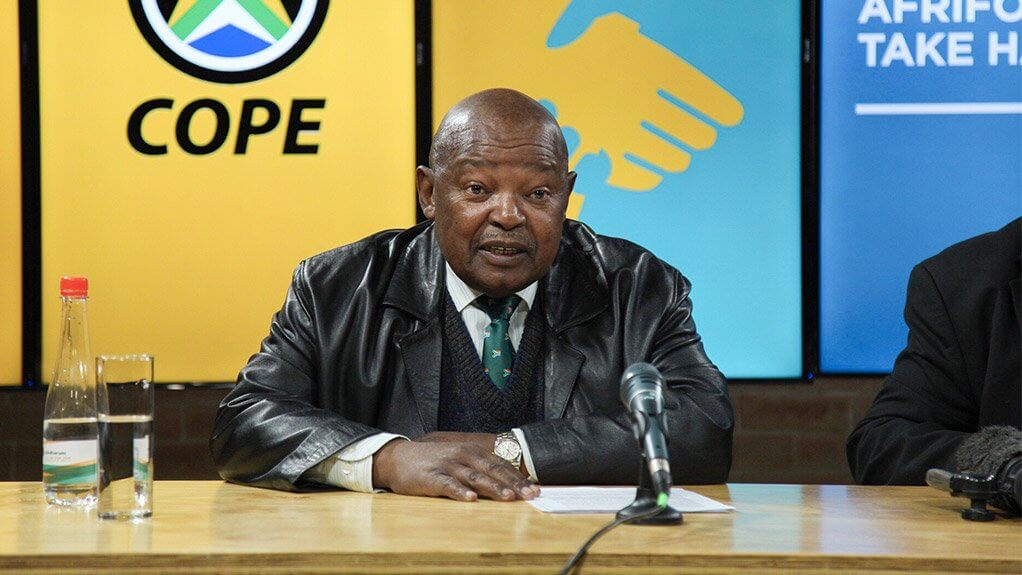

South African political leader Mosiuoa Lekota has died at the age of 77.
Lekota, a veteran anti-apartheid activist and co-founder of the Congress of the People (COPE), died in a Johannesburg hospital in the early hours of Wednesday, 4 March 2026, after battling illness.

What happened
The Congress of the People confirmed the death of its founding leader Mosiuoa Lekota on Wednesday morning.
Lekota died at a Johannesburg hospital in the early hours of the day at the age of 77.
Reports say he had been experiencing ill-health for some time and had stepped back from active political duties in August 2025 to focus on his health.
The party asked for privacy for Lekota’s family during the mourning period.
His death marks the passing of one of the prominent figures in South Africa’s democratic transition and post-apartheid politics.

Why it matters to South Africans
Lekota played a significant role in South African politics over several decades.
He was active in the anti-apartheid struggle, served in government after 1994, and later helped form one of the country’s most prominent opposition parties.
His political career spanned several major positions in government and Parliament, and he remained the president of COPE from its founding in 2008 until his death in 2026.
His death also comes at a time when COPE has experienced declining electoral support and internal leadership challenges.
What you need to know about Mosiuoa Lekota
| Key detail | Information |
|---|---|
| Full name | Mosiuoa Gerard Patrick Lekota |
| Age at death | 77 |
| Date of death | 4 March 2026 |
| Place of death | Johannesburg hospital |
| Political role | President and co-founder of COPE |
| Former role | South Africa’s Minister of Defence (1999–2008) |
| Anti-apartheid role | Activist and United Democratic Front leader |
| Birthplace | Kroonstad, Free State |
Early life and anti-apartheid activism
Mosiuoa Lekota was born on 13 August 1948 in Kroonstad in the Free State.
He became involved in student activism during his youth and was expelled from the University of the North due to political activism linked to the Black Consciousness Movement.
In the 1970s he worked as an organiser for the South African Students’ Organisation (SASO) and was arrested in 1974 before being imprisoned on Robben Island.
After his release in the 1980s, Lekota became a senior figure in the United Democratic Front (UDF), which played a key role in mobilising opposition to apartheid.
He was also one of the defendants in the Delmas Treason Trial, one of the most significant political trials during the final years of apartheid.
Leadership roles after democracy
After the first democratic elections in 1994, Lekota held several senior leadership positions in government.
These included:
- Premier of the Free State (1994–1996)
- Chairperson of the National Council of Provinces (1997–1999)
- Minister of Defence under President Thabo Mbeki (1999–2008)
During his time in the African National Congress (ANC), he served on the party’s National Executive Committee and other senior structures.
Formation of COPE
In 2008, Lekota left the ANC during internal political disputes and helped establish the Congress of the People (COPE).
The party was formed by leaders who broke away from the ANC following political tensions within the ruling party.
Lekota became the founding president of COPE on 16 December 2008 and remained the party’s leader until his death.
COPE initially gained strong electoral support in the 2009 national election, but its representation in Parliament declined in later elections and the party lost its parliamentary seats in the 2024 general election.
What happens next
COPE has not yet announced details about Lekota’s funeral arrangements or the party’s next leadership steps.
Reports indicate he will be buried in his home region in the Free State.
Further announcements are expected from the party and government leaders as tributes continue to emerge.
Where to get updates
South Africans can follow official updates through:
- Congress of the People (COPE) statements
- Parliamentary announcements
- Major South African news organisations
- Government communications regarding national tributes