




Unlock this story — it’s free
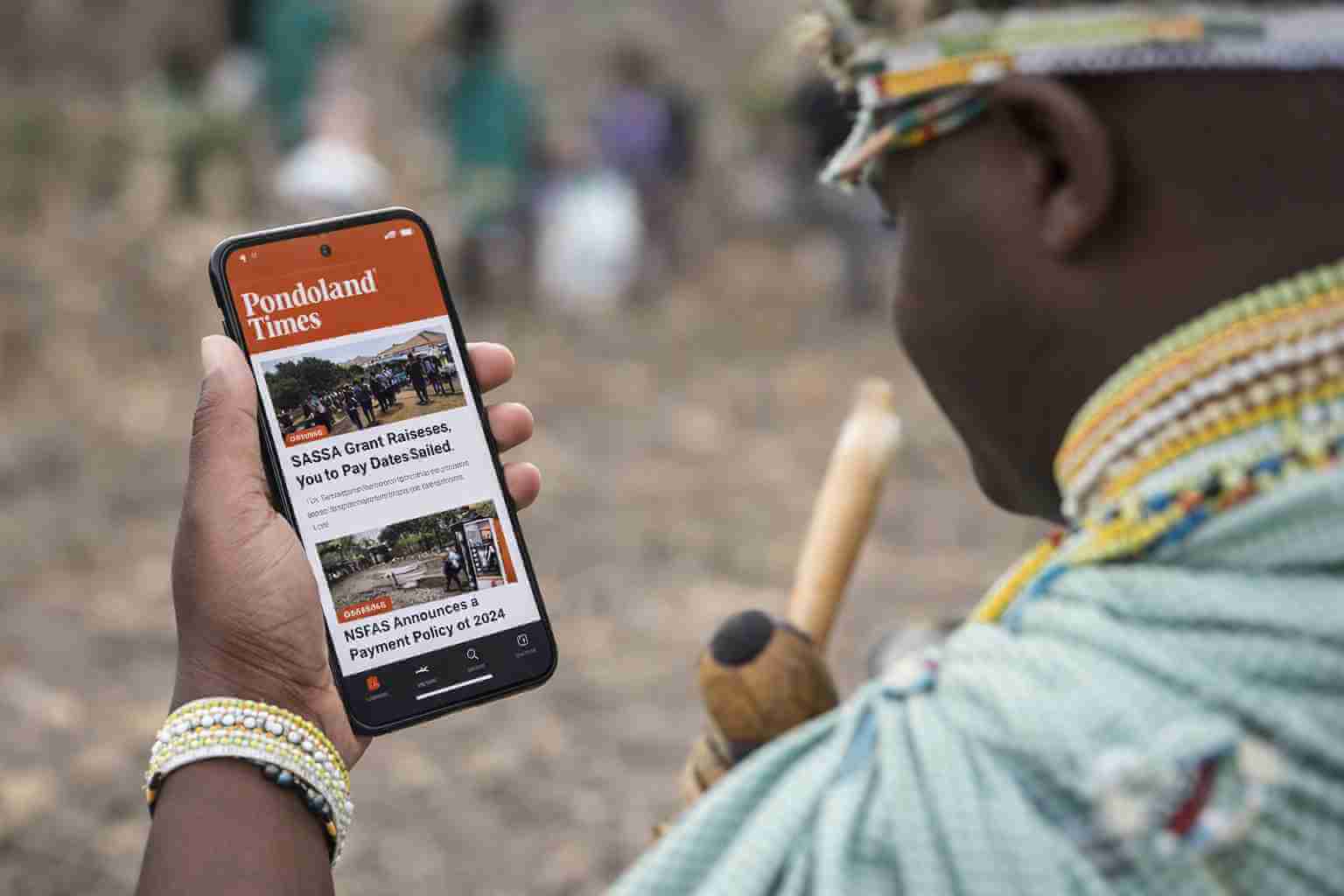
Pondoland Times, a rural community newspaper based in Eastern Cape, launched its own mobile application on Android and iOS without external funding, investor backing or grant support.
Within the first months of launch:

- The Android app reached 63 total downloads.
- The iOS app recorded 34 installs in 30 days.
- The App Store conversion rate reached 8.5%.
- The Android app maintains a 5.0 rating.
The case demonstrates that rural publishers can build and grow owned digital infrastructure organically, even with limited financial resources.
1. The Challenge
Rural and independent publishers face structural sustainability constraints:
- Declining print advertising revenue.
- Volatile website traffic driven by search and social algorithms.
- Dependence on third-party platforms such as Facebook.
- Limited access to digital transformation funding.
Without owned distribution channels, long-term audience retention and revenue diversification become increasingly difficult.
Pondoland Times identified the need to reduce platform dependency and strengthen direct audience engagement.
2. Strategic Objective
The primary objective was to:

- Build an owned mobile distribution channel.
- Enable direct push notifications.
- Increase repeat readership.
- Lay groundwork for future subscription and membership models.
- Strengthen long-term digital sustainability.
The app was developed and launched without grant funding, using internal operational capacity and existing digital infrastructure.
3. Implementation
Launch Timeline
- Android launch: December 2025
- iOS launch: January 2026
Core Features
- Full news feed access
- Push notifications for breaking news (pilot phase)
- SASSA and grant update alerts
- Jobs and opportunity updates
- Local government and community coverage
- SASSA grant updates
- Budget speech analysis
- NSFAS information
- Jobs and opportunities
These topics generate consistent search traffic and repeat engagement.
4. Performance Results
Performance Snapshot (January–February 2026)
| Platform | Metric | Result |
|---|---|---|
| iOS | App Store Impressions | 398 |
| iOS | Installs (Last 30 Days) | 34 |
| iOS | Conversion Rate | 8.5% |
| Android | Total Downloads (Since Launch) | 63 |
| Android | Installed Audience | 21 |
| Android | Google Play Rating | 5.0 |
Key Insight
The data indicates strong conversion performance. When users encounter the app listing, they are willing to install.
The growth constraint lies in increasing store impressions and app visibility — not audience demand.
5. Outcomes
The launch delivered several strategic outcomes:
- Established owned digital distribution infrastructure.
- Reduced reliance on social media algorithms.
- Created push notification capability for high-impact public service updates.
- Demonstrated organic install growth without paid advertising.
- Validated audience willingness in a rural market context.
The results challenge the assumption that rural audiences are not ready for mobile-first news consumption.
6. Scalability Potential
With structured promotion across high-intent content categories, including SASSA and grant coverage, app store impressions could increase significantly.
If impressions rise to approximately 1,200 per month and conversion remains near 8%, monthly installs could exceed 100 organically.
The infrastructure is already in place. Growth now depends on optimisation and visibility rather than capital investment.
7. Strategic Significance
For rural publishers, sustainability increasingly depends on:
- Ownership of distribution.
- Direct communication with readers.
- Reduced platform dependency.
- Infrastructure that supports future monetisation.
This case illustrates that digital transformation in rural media is achievable without external funding when strategy and execution align.
8. Lessons for Local Publishers
- Funding is not a prerequisite for digital infrastructure.
- High-intent content verticals drive app adoption.
- Conversion rates may be stronger than assumed in rural markets.
- Visibility and promotion are critical growth levers.
- Infrastructure compounds in value over time.
Conclusion
Pondoland Times began as a weekly print newspaper serving rural Eastern Cape.
Today, it operates across:
- Print circulation
- A high-traffic digital platform
- A mobile app ecosystem
Built without funding, the app demonstrates that rural publishers can design, launch and grow digital infrastructure organically.
The transition from print to push notifications represents more than technological adoption — it reflects a strategic move toward long-term media sustainability.
GET IMPORTANT UPDATES FIRST
Stay informed with news on agriculture, funding opportunities and jobs — so you don’t miss chances that could improve your income and future.