


Download the Pondoland Times app for crime updates, court news, and important alerts from your area so you don’t miss critical information.
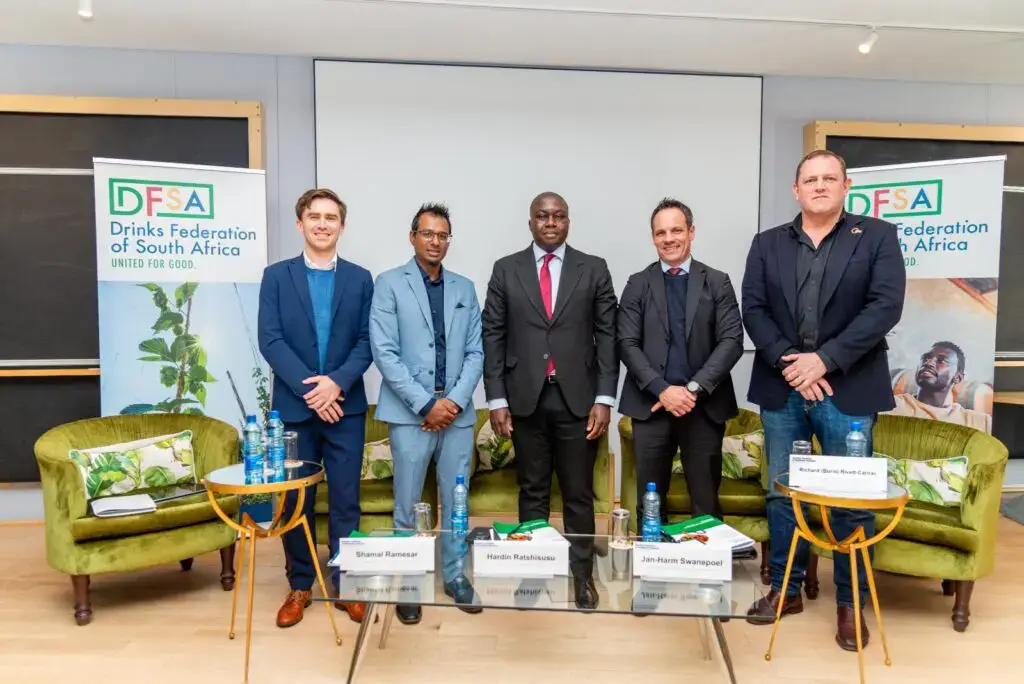
The Drinks Federation of South Africa (DF-SA) has confirmed its role as a collaborative industry partner at the 2026 EMEA Security Conference, taking place in Cape Town from 25 to 26 March 2026. Held under the theme “Safeguarding Africa’s Future: Strengthening Regional Collaboration Against Illicit Trade,” the conference will convene enforcement authorities, customs leaders, policymakers, and organised businesses from across Europe, the Middle East, and Africa.

Illicit alcohol is a material economic and regulatory risk in South Africa. According to the 2025 Euromonitor International study, Understanding the Illicit Alcohol Market in South Africa, illicit alcohol accounts for 18% of total market volume, representing an estimated R25 billion annually. Fiscal losses to the state reached approximately R16.5 billion in 2024.
DF-SA CEO Angela Russell says “participation in the conference reflects the need to position illicit alcohol within a broader enforcement and security framework.”
Illicit alcohol must be understood within a broader security context. When organised illicit trade entrenches itself, the implications for revenue systems, fair competition, and enforcement capacity are significant. Acting early and collectively is critical. DF-SA is calling for structured collaboration that delivers measurable impact.
‘Illicit alcohol’ refers to products that are produced, distributed or sold outside the legal and regulatory framework. This includes non-duty-paid imports, smuggled or round-tripped goods, tax evasion, diverted stock and counterfeit alcohol. Counterfeit alcohol, which involves the unlawful imitation of legitimate brands, fraudulent packaging and misrepresentation of origin, forms part of the broader illicit market and bypasses regulated production standards, quality controls and consumer safety requirements. South Africa’s legal alcohol value chain remains a significant economic contributor. Independent modelling estimates that the industry contributed R108.4 billion to GDP in 2022 and directly sustained 195,966 jobs. Illicit trade distorts market integrity and diverts revenue from public services.
At the conference, DF-SA Head of Research, Dr. Shamal Ramesar, will present an independent analysis of the scale and structural drivers of illicit alcohol.
“Effective intervention begins with clarity,” says Ramesar. “Independent research shows that illicit alcohol accounts for 18% of total market volume, with an estimated R16.5 billion in annual fiscal losses. The recent budget speech reaffirmed the importance of CPI-linked excise adjustments, which support predictability and help limit unintended price distortions in the legal market. DF-SA Deputy Chairperson, Sola Oke, will address the economic and governance implications of illicit trade. Grounding enforcement and policy discussions in verified data ensures responses remain proportionate and impact-driven.”
Sola Oke, DF-SA Deputy Chairperson and Managing Director of Pernod Ricard Africa, will address the economic and governance implications of illicit trade.
“Illicit alcohol undermines responsible trade and weakens economic resilience,” says Oke. Criminal networks that evade tax and regulatory obligations put compliant businesses and jobs at a structural disadvantage. Protecting legitimate enterprise requires coordinated, collective action across industry and government.
The beer, wine, and spirits sectors have established a Responsible Trade Task Force, which will be housed under DF-SA as a central coordination platform. The Responsible Trade Task Force is currently in its foundational phase, formalising governance structures and intelligence alignment across categories. The direction is clear: the industry is aligning its capabilities to coordinate action and engage with a united, responsible and responsive voice.
As South Africa hosts this international security platform, DF-SA’s participation reinforces a clear objective: to strengthen evidence, enhance structured collaboration, and advance economic integrity through sustained and coordinated responses to illicit trade.
GET IMPORTANT UPDATES FIRST
Stay informed with news on agriculture, funding opportunities and jobs — so you don’t miss chances that could improve your income and future.