

Download the Pondoland Times app for daily job alerts, vacancies, and opportunities in the Eastern Cape so you never miss out.
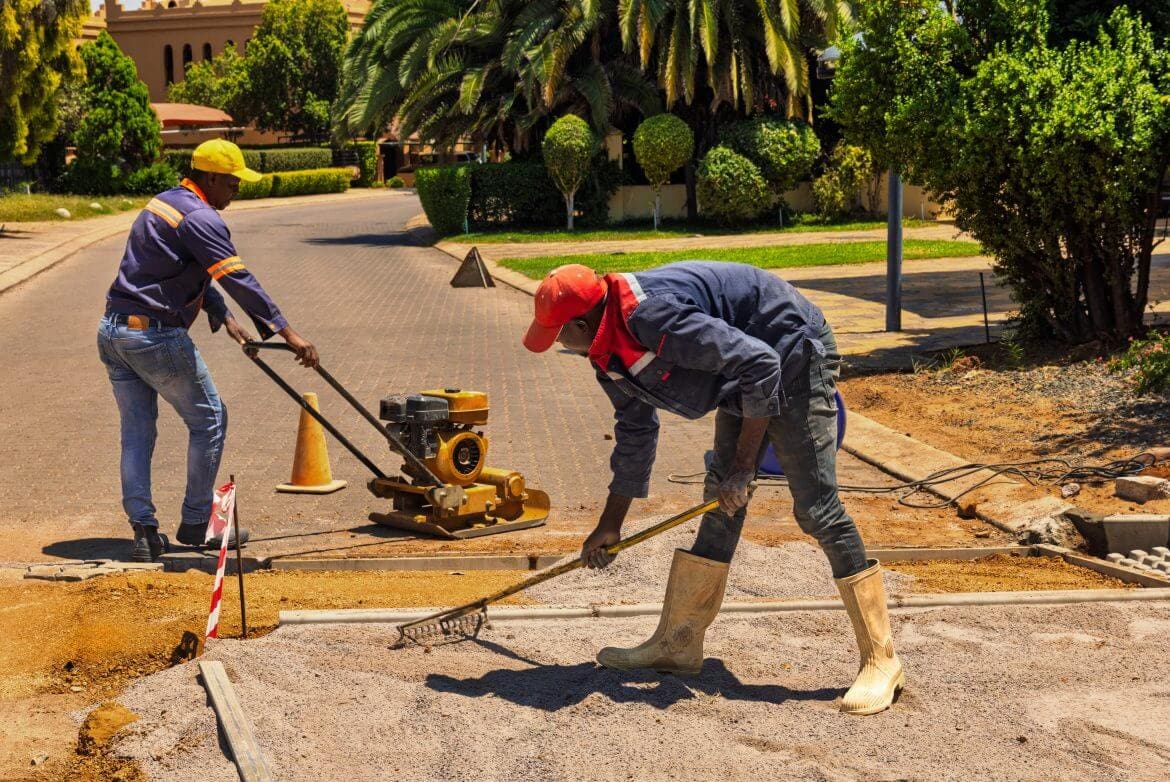
Employment and Labour Minister Nomakhosazana Meth announced the R1.44 increase in early February, saying the adjustment will benefit all workers, including vulnerable farm and domestic workers.
The National Minimum Wage is the minimum amount an employer is legally required to pay employees for work performed.
According to the Department of Employment and Labour (DEL), the introduction of the minimum wage in 2019 helped lift millions of workers out of extremely low pay levels.
“In 2019, when we introduced the minimum wage at R20 an hour, there were about six million workers in the economy who were earning below R20 an hour. Therefore, those six million workers were transferred into a higher level by the minimum wage,” said the department’s Acting Deputy Director-General for Labour Policy and Industrial Relations, Thembinkosi Mkalipi.
He added that increases in the minimum wage have kept pace with inflation.
“We have been able to protect the minimum wage against inflation,” Mkalipi said.
Purpose of the minimum wage
The National Minimum Wage Act, which came into effect in 2019, aims to improve wages for the lowest-paid workers, protect employees from extremely low pay and support economic development and social justice.
The Act applies to most workers and employers in South Africa but excludes members of the South African National Defence Force, the National Intelligence Agency and the South African Secret Service, as well as volunteers who perform work without remuneration.
The department stressed that no employee may be paid below the national minimum wage, and employers may not change working hours or conditions in order to avoid paying the legal wage.
Compliance challenges
Despite the law, compliance remains a challenge.
Mkalipi said about 40% of employers are still not complying with the minimum wage, a trend that has remained consistent since the policy was introduced.
He attributed non-compliance to factors such as affordability challenges and the limited number of labour inspectors available to enforce the law.
“We don’t have enough inspectors. Even if we had enough inspectors, there’s no way that we are going to have an inspector for each and every workplace,” he said.
Some employers may also take a calculated risk by assuming they will not be inspected.
Government plans to strengthen enforcement
In his State of the Nation Address on 12 February 2026, President Cyril Ramaphosa announced that an additional 10 000 labour inspectors will be recruited this year.
Minister Meth welcomed the move, saying the additional inspectors will strengthen the government’s ability to enforce labour laws and protect vulnerable workers.
Currently, the department has about 2 300 labour inspectors nationwide.
The department is also implementing Project 20K, a national initiative launched in 2025 to recruit and place 20 000 graduate interns across the public sector between 2025 and 2027.
Exemption process for employers
Employers who cannot afford to pay the minimum wage may apply for an exemption through an online system.
Applicants must submit financial information for the system to assess affordability. If approved, the employer receives a certificate allowing them to temporarily pay up to 10% below the minimum wage.
Mkalipi said the automated system ensures transparency and prevents corruption.
“There’s no human being involved in it – precisely because we don’t want inspectors to ask for brown envelopes,” he said.
Applications can be submitted through the online system at nmw.labour.gov.za.
Impact on workers’ earnings
Under the new wage level of R30.23 per hour, a worker employed for an eight-hour day will earn:
- R241.84 per day
- R1 209.20 for a five-day work week
The law also requires that workers must be paid for a minimum of four hours, even if they work fewer hours on a given day.
Employers may deduct costs such as accommodation or meals, but these deductions may not exceed one-third of the worker’s salary.
Research on job creation
Mkalipi said research conducted by a unit at the University of Cape Town shows no evidence that the minimum wage has caused workers to lose their jobs.
The research uses data from Statistics South Africa’s Quarterly Labour Force Survey (QLFS) to evaluate the impact of wage increases on employment.
While the research cannot determine whether the minimum wage discourages employers from hiring new workers, it has found no evidence that the policy has caused job losses.