
Unlock this story — it’s free
Reimagining Learning Through AI
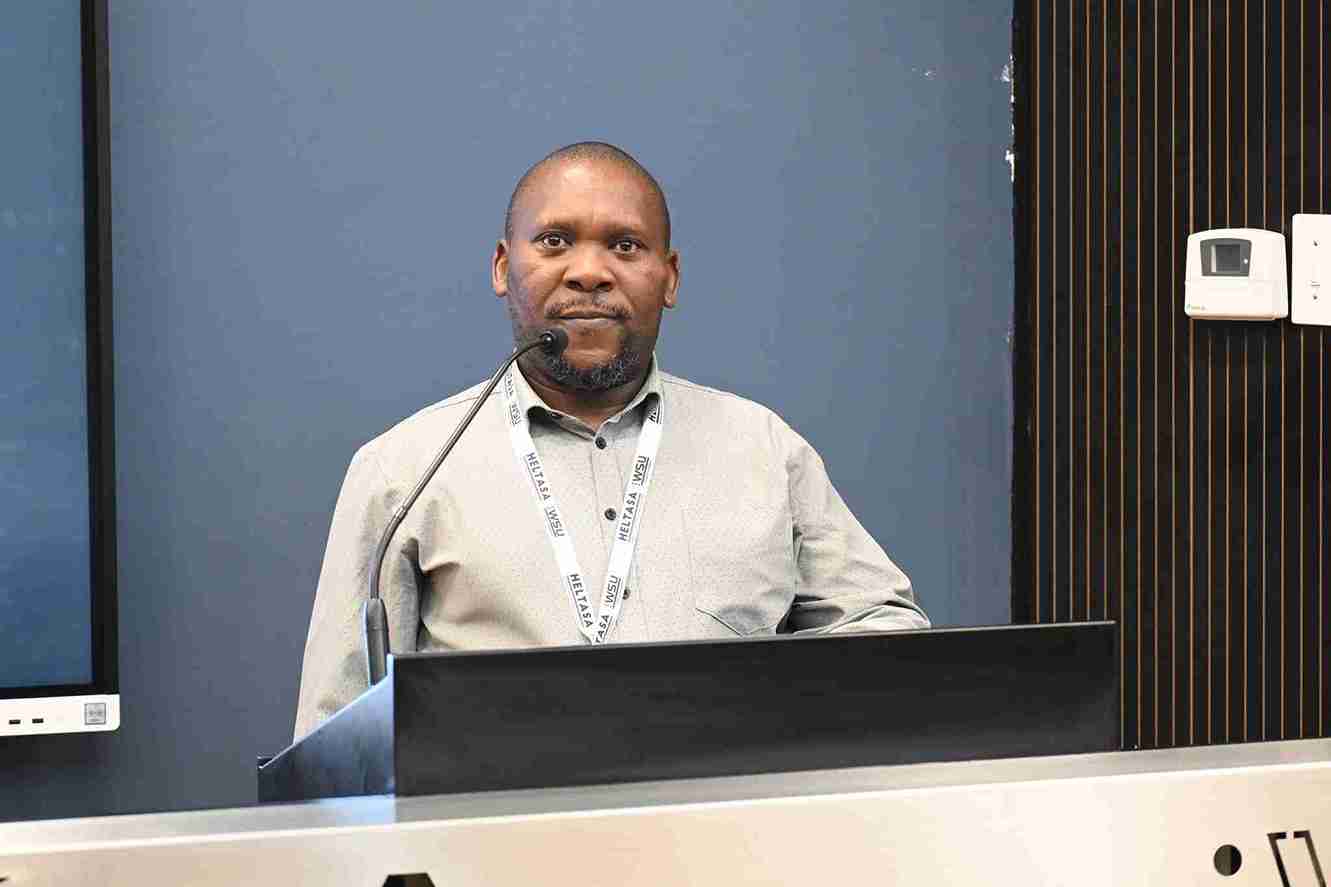
Walter Sisulu University (WSU) is at the forefront of educational innovation, thanks to the pioneering work of Dr. Siyabonga Pika, a lecturer in the Faculty of Economics and Financial Sciences. Dr. Pika presented his research at the Higher Education Learning and Teaching Association of South Africa (HELTASA) (Un)Conference, held at WSU’s Potsdam Delivery Site, where he explored how Artificial Intelligence (AI) can revolutionize programming education.
Under the theme “Reimagining Knowledge: Blending Traditional and Innovative Approaches in Higher Education,” Dr. Pika emphasized how AI tools can strengthen participation, stimulate curiosity, and bridge learning gaps among students—especially in rural universities.
“Applying AI tools in programming classrooms offers a pathway to bridge participation gaps and improve accessibility to complex concepts,” he explained.
AI as a Teaching Partner
Dr. Pika highlighted how tools such as ChatGPT, Plus AI, and EduAide are reshaping higher education by simplifying complex coding concepts, enhancing accessibility, and encouraging independent learning. He noted that AI has the potential to automate repetitive academic tasks, provide real-time learning support, and foster innovation among both students and lecturers.

“These technologies are not replacing educators but complementing their work, helping to create more interactive, adaptive, and engaging classrooms,” Dr. Pika added.
His research drew data from 60 second-year Software Skills students — 38 males and 22 females — from rural backgrounds, proving that location does not define innovation.
Rural Innovation, Global Impact
Reflecting on his motivation for participating in HELTASA 2025, Dr. Pika said the conference offered an opportunity to refine his teaching philosophy and exchange ideas with academics from across the country.
“I used the HELTASA (Un)Conference to reflect on my teaching practices and receive constructive critique from colleagues across various institutions and disciplines,” he shared.
He further stressed that rural universities are not behind, but rather hubs of creativity and problem-solving, where educators are finding new ways to make learning inclusive and relevant.
Championing Transformative Education
Dr. Pika’s work embodies WSU’s vision of using innovation and technology to drive inclusive, high-impact education. His approach demonstrates that even in resource-limited contexts, forward-thinking teaching can empower students to excel in digital disciplines.
Through his leadership, WSU continues to affirm its role as a transformative rural university, nurturing talent and advancing South Africa’s broader educational goals.