

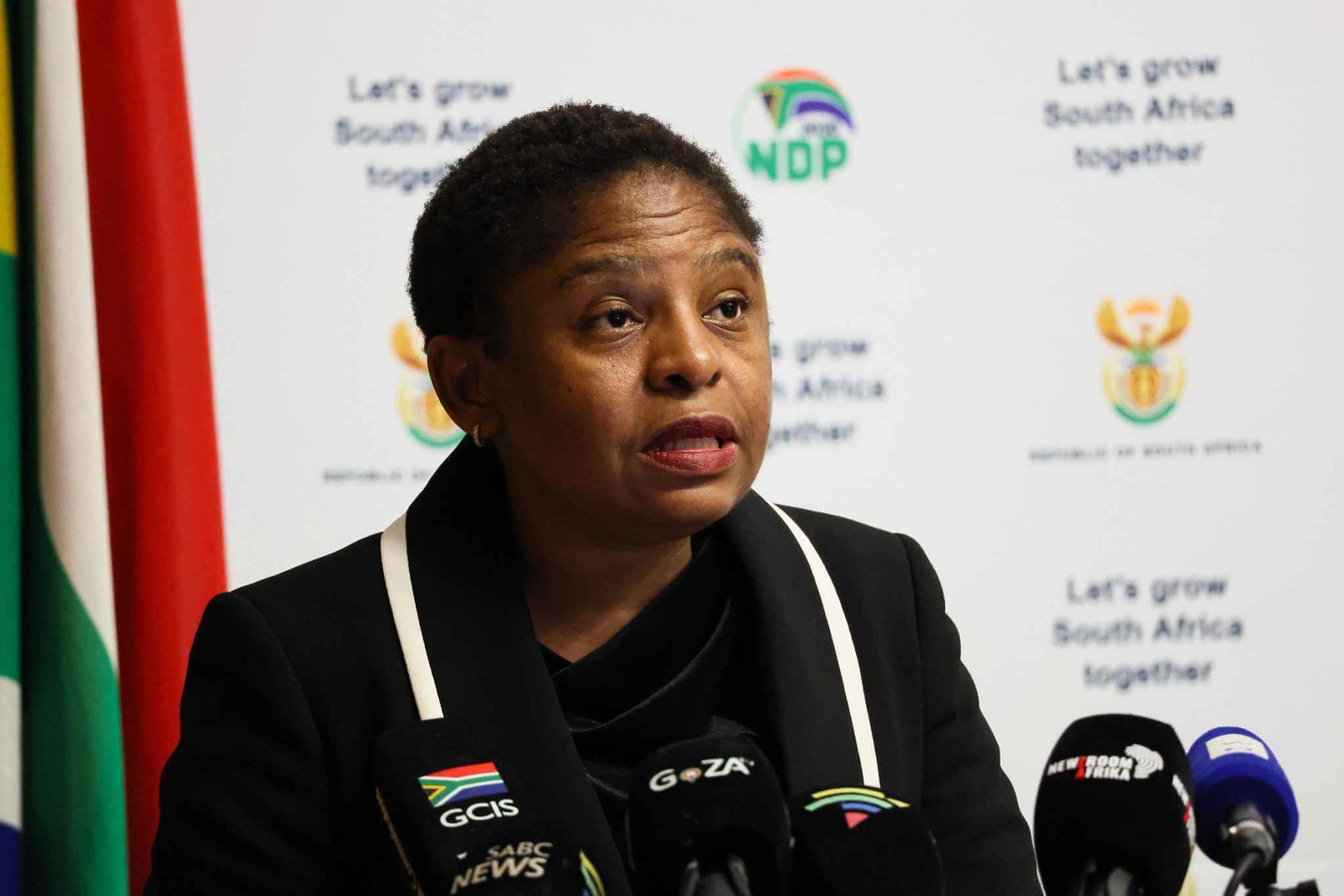
Minister Khumbudzo Ntshavheni in the Presidency has officially released the National Security Strategy (NSS) 2024–2029 along with the National Intelligence Estimate (NIE) 2019–2024—a historical step toward transparency in state security governance. This marks the first time such high-level intelligence instruments are made public, balancing openness with national security imperatives.
Ntshavheni highlighted this move as a paradigm shift in how intelligence interacts with the state, Parliament, and the public—a direct response to the 2018 High-Level Review Panel’s recommendations. She stressed that the NIE offers an evidence-based review of key threats such as illegal migration, cyber risks, espionage, and climate-driven instability.
The NIE focuses on five primary threat clusters—economic, territorial, state authority, citizen welfare, and foreign-based risks—while the NSS deploys an inclusive, whole-of-society approach structured around eight pillars ranging from public safety and territorial integrity, to environmental and cultural security.
However, this progressive release comes after a delayed publication stirred concern. Despite Ntshavheni’s 2024 commitment to publish the NSS by September and NIE by August, the documents remained unreleased well into mid-2025, prompting parliamentary scrutiny. The delay was attributed to extensive legal consultations and alignment with constitutional and intelligence legislation.

Ntshavheni assured that these legal measures were necessary to preserve the balance between transparency and security, and reaffirmed that the documents reflect Cabinet-endorsed policy frameworks .
The release is welcomed by transparency advocates and signals a stronger democratic oversight over South Africa’s intelligence and security sectors. Going forward, the government aims to use these publicly available frameworks to inform citizens while maintaining strategic confidentiality.